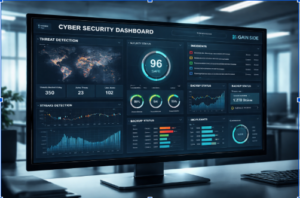
It happens every 39 seconds: a cyberattack somewhere in the online world. But the average breach remains undetected for 207 days. Almost seven months of attackers laterally moving, stealing data, and gaining persistence within your environment.
For companies managing distributed teams, compliance obligations, and increasingly sophisticated threat actors, this detection gap isn’t just a technical problem. It’s an existential business risk.
Managed Detection and Response (MDR) and Extended Detection and Response (XDR) represent the evolution from reactive security postures to proactive threat management. While traditional security tools generate alerts, MDR and XDR deliver actionable intelligence backed by expert analysis and coordinated response capabilities.
This guide explores what MDR and XDR deliver, when your organization needs them, and how to implement these solutions effectively. Whether you’re searching for IT managed services in Orlando, or anywhere your business operates.
What MDR & XDR Actually Provide?
Today’s cyber threats mature faster than legacy defenses. Antivirus and firewalls can’t keep pace with polymorphic malware, supply-chain attacks, and insider threats. MDR and XDR bridge the gap with proactive detection and automated response.
Here’s what a modern managed cybersecurity ecosystem should include:
1. 24/7 Threat Monitoring:
Cybercriminals don’t work 9–5. MDR provides round-the-clock monitoring, leveraging AI and human threat hunters to identify anomalies in real time. Every second counts. Especially when one misstep could compromise sensitive data.
2. Data Correlation Across Environments:
XDR aggregates data across endpoints, servers, cloud workloads, emails, and identities. It helps in correlating signals into actionable intelligence. Instead of drowning in alerts, security teams get contextual insights to act on.
3. Automated + Human Response:
Automated responses neutralize threats instantly. It’s like isolating infected devices or blocking malicious IPs. But it doesn’t end there. MDR ensures human experts validate and fine-tune these actions to prevent false positives.
4. Forensics and Root Cause Analysis:
After a breach attempt, the question isn’t what happened. It’s why. MDR/XDR solutions dig deep into event logs to trace attack paths, identify weak spots, and fortify defenses for next time.
5. Proactive Threat Hunting
Rather than waiting for alerts, MDR experts actively hunt for hidden threats. Leveraging behavior analytics and threat intelligence feeds to detect stealthy attackers before they cause damage.
Critical Indicators Your Organization Needs MDR/XDR Now
Recurring Security Incidents Consuming Internal Resources
If your IT team constantly firefights security incidents, such as investigating phishing attempts, cleaning malware infections, or responding to suspicious activity. You’re already paying the hidden costs of inadequate detection capabilities. Each incident diverts technical resources from strategic projects to reactive damage control.
When incidents become routine rather than exceptional, you’ve crossed the threshold where managed cybersecurity services deliver immediate ROI. MDR providers absorb this operational burden, allowing internal teams to focus on business-enabling technology initiatives rather than perpetual incident response.
Compliance Mandates Requiring Demonstrable Security Controls
Regulatory frameworks increasingly require specific security capabilities beyond basic controls. CMMC for defense contractors, GDPR for European data handlers, and state-level privacy laws demand documented incident detection and response capabilities with defined time-to-detection and time-to-containment metrics.
Building compliant security operations internally requires substantial investment in tools, personnel, and processes. Documented procedures, audit-ready reporting, and contractual SLAs that satisfy examiner requirements.
Complex Multi-Location Operations Multiplying Your Attack Surface
Managing security across distributed environments creates visibility gaps. Branch offices, remote workers, cloud workloads, and partner connections each introduce unique risks. Traditional security tools struggle to correlate activity across these distributed environments, allowing attackers to exploit boundaries between security zones.
XDR’s unified telemetry collection eliminates these blind spots. Whether you’re protecting headquarters, satellite offices, or remote employees, XDR provides consistent visibility and coordinated response capabilities. For organizations managing IT managed services Orlando locations alongside operations in other regions, this unified visibility becomes essential for a consistent security posture.
Resource Constraints Preventing Security Investment
Cybersecurity talent shortages affect every organization, but small and mid-market enterprises face particular challenges competing for scarce specialists. Building internal SOC capabilities requires not just hiring analysts but providing them with tools, training, and career development opportunities that large enterprises offer more easily.
MDR eliminates this competition. Instead of recruiting individual specialists, you gain access to entire security teams with diverse expertise—malware analysts, forensic investigators, threat intelligence specialists, and incident coordinators. This team model provides capability depth impossible to replicate internally at a comparable cost.
Implementation Best Practices: Doing MDR/XDR Right
Deploying MDR/XDR isn’t just about technology. It’s about alignment, process, and continuous optimization.
Here’s how to ensure your rollout delivers maximum protection and ROI.
1. Define an Incident Response Process
Before implementing, document how incidents are escalated, who gets notified, and what actions to take. A clearly defined IR plan ensures swift, coordinated responses when seconds matter.
2. Integrate with Existing Security Stack
Your MDR/XDR should plug seamlessly into existing tools from firewalls and SIEMs to endpoint detection. Integration prevents data silos and ensures full-spectrum visibility.
3. Establish Escalation Paths
Set up a tiered response path that designates what gets automated, what goes to your IT manager, and what triggers a direct call from Gainside’s SOC team. This keeps accountability clear and minimizes confusion during an attack.
4. Run Disaster Recovery (DR) Drills
Simulation exercises expose gaps before real attackers do. Gainside recommends quarterly DR drills. It help in ensuring your team knows exactly what to do when the red alerts flash.
5. Transparent Reporting & Metrics
Track key KPIs like Mean Time to Detect (MTTD), Mean Time to Respond (MTTR), and false positive rates. Transparent dashboards keep stakeholders informed & compliance officers happy.
The Cost of Waiting: Why Delay Multiplies Risk
Organizations that postpone MDR/XDR deployment often rationalize the delay as cost management—”We’ll implement advanced security once budget allows.” This framing inverts the actual economics. Every day without comprehensive detection capabilities compounds breach risk and potential losses.
The average cost of a data breach is $4.45 million. A figure that could fund comprehensive MDR services for a decade. Beyond direct breach costs, consider regulatory fines, legal liability, customer trust erosion, and competitive disadvantage. These consequences don’t wait for convenient timing or budget cycles.
Modern attackers move with speed incompatible with procurement cycles. Ransomware operators typically achieve encryption within 24-48 hours of initial access. Waiting six months for budget approval and three months for implementation provides attackers ample opportunity to establish persistence before you deploy detection capabilities. By the time you implement MDR, you’re not preventing breaches. You’re discovering breaches that occurred months earlier.
Managed cybersecurity isn’t an aspirational luxury for mature security programs. It’s foundational protection for any organization handling digital assets. The question isn’t whether to implement MDR/XDR but whether you implement it before or after your first major breach. One approach costs thousands monthly. The other can cost millions in a single incident.
Conclusion
Cybersecurity isn’t just about preventing attacks. It’s about protecting business continuity, compliance, and customer trust.
Waiting for the “right time” to implement MDR or XDR is a luxury modern enterprises can’t afford. Threats evolve daily, but so can your defenses, with the right partner.
At Gainside, we empower organizations across Orlando, Hartford, and beyond with next-generation managed cybersecurity solutions that deliver peace of mind and measurable results.
CTA: Ready to move from reactive to resilient?
Request a Gainside MDR demo today and see how real-time detection and response transform your security posture from vulnerable to invincible.